Self Check-In Campsite: Benefits, Challenges & Best Practices
The self check-in campsite concept is becoming increasingly popular across Europe.
As guest expectations evolve and staffing challenges continue to affect the outdoor hospitality industry, more campsite owners are exploring digital arrival solutions.
But is self check-in the right choice for every campsite?
While technology can improve efficiency and convenience, it also raises important questions about hospitality and guest experience.
Why Self Check-In Is Growing
Many campsites face similar operational challenges.
Reception teams often experience peak workloads during arrival days, while guests increasingly expect flexibility.
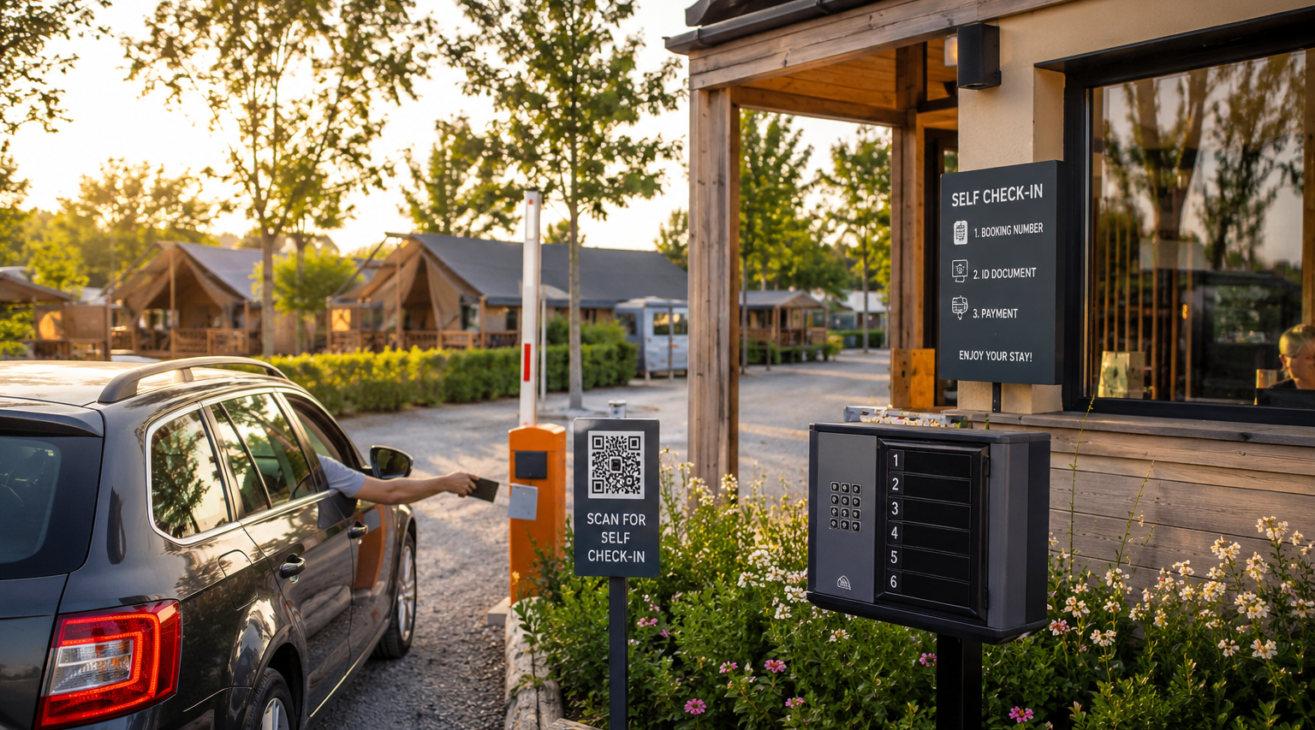
A self check-in campsite system can help by:
- reducing queues at reception
- supporting late arrivals
- improving operational efficiency
- reducing administrative tasks
- creating a smoother guest journey
These advantages explain why self check-in is becoming more common.
Guests Want Convenience
Today’s travelers are accustomed to digital services.
They book flights online, order food through apps and access hotel rooms using digital keys.
As a result, many guests appreciate the convenience of self check-in.
Benefits include:
- faster arrivals
- flexible check-in times
- less waiting
- easier registration processes
For some guest segments, convenience has become a major factor in the overall holiday experience.
Personal Hospitality Still Matters
Despite the growth of technology, hospitality remains a people business.
Many guests still value:
- a friendly welcome
- local recommendations
- personal assistance
- direct communication
For family campsites and hospitality-focused parks, the arrival experience often plays an important role in guest satisfaction.
The Rise of Hybrid Check-In Models
Many campsites are finding success with a hybrid approach.
Instead of replacing reception entirely, guests can choose between:
- digital self check-in
- traditional reception check-in
- online pre-registration
- after-hours arrivals
This allows campsites to combine efficiency with personal service.
Which Campsites Benefit Most?
A self check-in campsite model often works particularly well for:
- glamping resorts
- holiday parks
- accommodation-focused campsites
- properties with frequent late arrivals
Smaller campsites with a strong focus on personal hospitality may prefer a more traditional approach.
The Future of Guest Arrivals
Guest expectations continue to evolve.
While personal service remains important, flexibility and convenience are becoming equally valuable.
The most successful campsites will likely combine technology with hospitality to create a better arrival experience.
For many operators, self check-in is no longer a question of if, but when and how.