
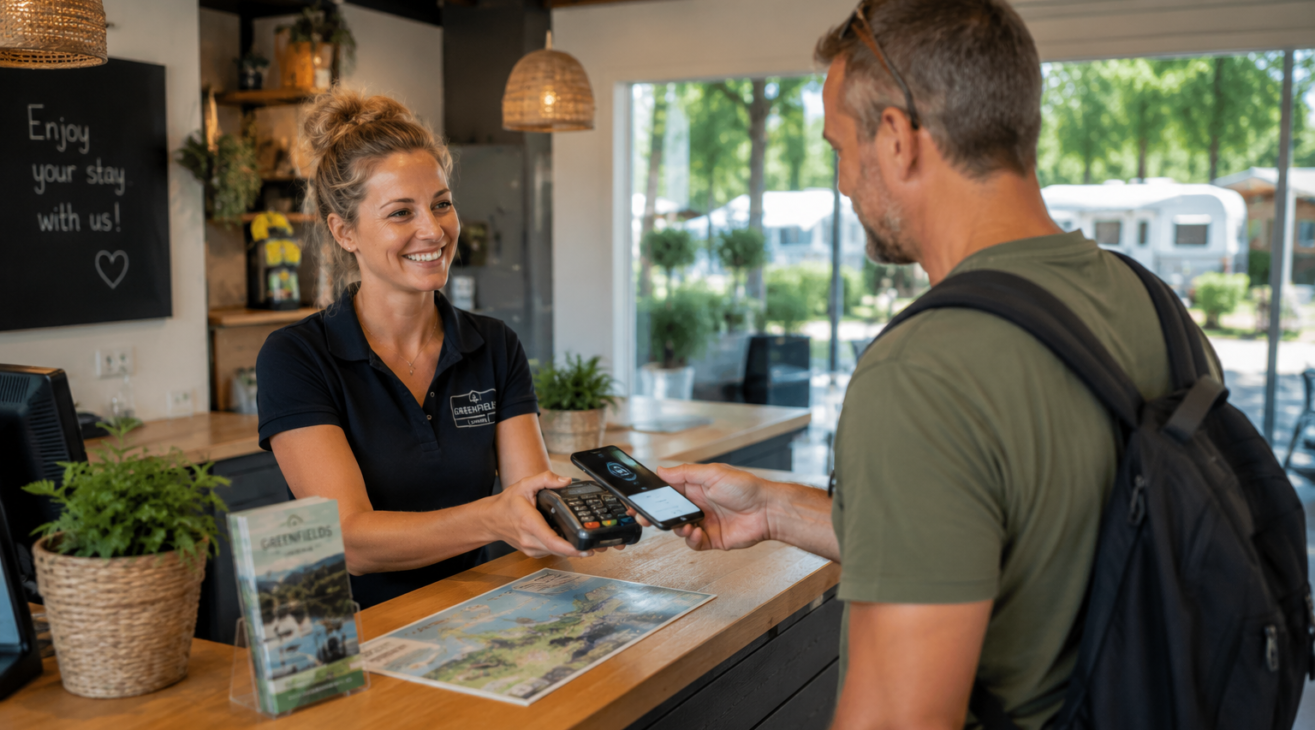
Do Camping Guests Still Pay Cash?
Not long ago, cash was the preferred payment method at many campsites.
Guests paid for accommodation, restaurant bills, bike rentals and activities using banknotes and coins.
Today, the situation looks very different.
Across Europe, digital payments continue to grow, while cash usage declines in many countries.
For campsite owners, this raises an important question:
Do camping guests still pay cash?
Payment Habits Are Changing
Consumer payment behavior has evolved rapidly over the last decade.
Many travelers now prefer:
- contactless cards
- mobile wallets
- smart watches
- online payments
- digital booking platforms
Convenience has become one of the main drivers behind payment choices.
Not Every Market Is the Same
While digital payments dominate in some countries, cash remains important in others.
For example:
- Dutch guests often expect card payments everywhere
- Scandinavian travelers rarely carry cash
- German guests still use cash more frequently than many neighboring markets
- Southern European markets often show a mix of both
Understanding guest demographics can help campsites choose the right payment strategy.
Guests Expect Convenience
Modern travelers increasingly expect flexibility.
Many guests prefer being able to pay using:
- Visa
- Mastercard
- Apple Pay
- Google Pay
- local payment methods
When preferred payment options are unavailable, guest satisfaction may be affected.
Cash Still Has Advantages
Despite declining usage, cash continues to offer benefits.
For example:
- no transaction fees
- instant settlement
- useful during technical outages
- preferred by some guest groups
For this reason, many campsites continue to accept cash alongside digital payments.
Digital Payments Improve Efficiency
Digital payment systems can reduce administrative work.
Benefits often include:
- faster transactions
- easier reporting
- reduced cash handling
- lower risk of counting errors
- improved financial transparency
These operational advantages can save both time and money.
What About Restaurants and Shops?
Payment preferences may differ across departments.
Guests who book accommodation online often expect the same convenience at:
- restaurants
- bars
- mini markets
- rental services
- activity programs
Consistency across the guest journey becomes increasingly important.
Security Matters
Handling large amounts of cash creates additional responsibilities.
Campsites must consider:
- theft prevention
- secure storage
- cash transport
- staff procedures
Digital payments can reduce some of these risks.
The Future Is Likely Hybrid
Most campsites will probably continue accepting both payment methods for the foreseeable future.
However, the share of digital transactions is expected to keep growing.
The goal is not necessarily eliminating cash.
The goal is ensuring guests can pay in the way they prefer.
Understanding Guest Expectations
Payment systems may seem like a small operational detail.
In reality, they influence convenience, efficiency and the overall guest experience.
As payment habits continue to evolve, campsites that adapt to changing expectations will be better positioned to serve future guests.