
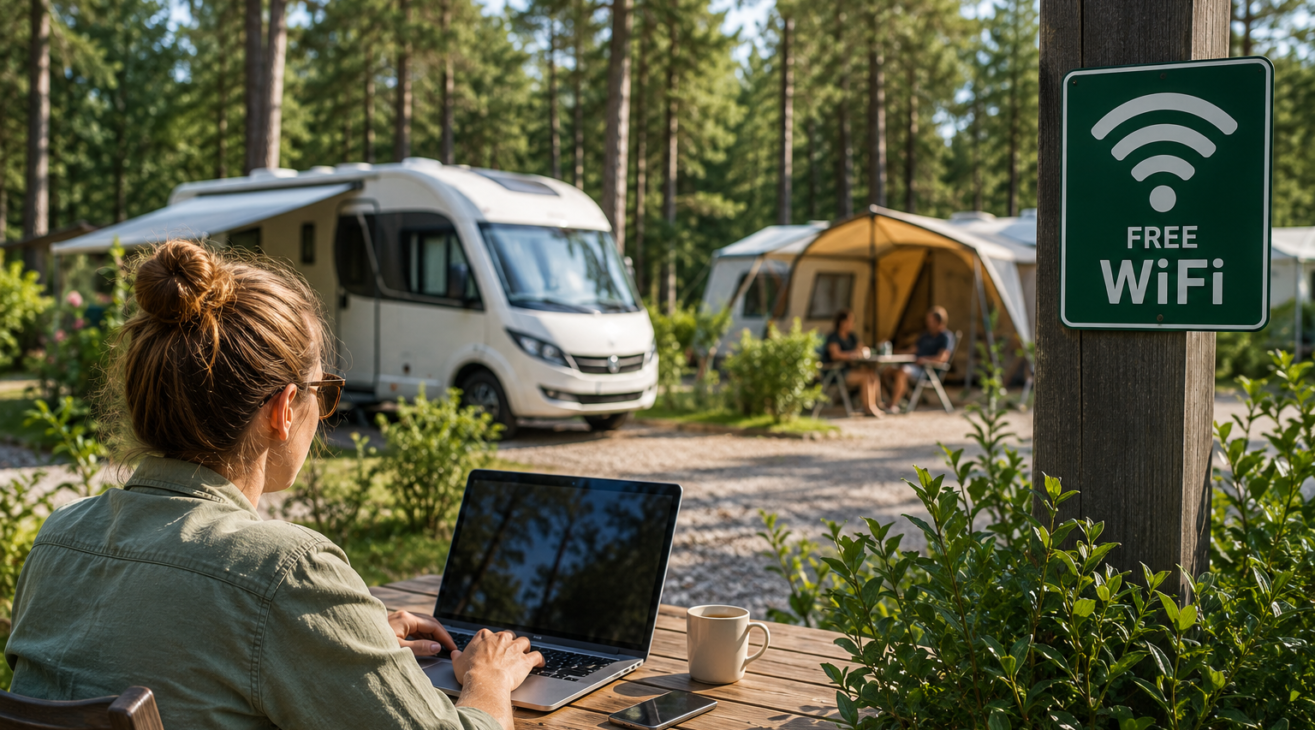
What Guests Expect From Campsite Wi-Fi Today
How Campsites Can Attract Guests Outside Peak Season
For many campsites, the majority of revenue is generated during a short summer period. Outside these peak months, occupancy often drops significantly.
However, off season camping is becoming more important for campsite owners who want to improve stability and reduce dependence on a limited timeframe.
The challenge is not only attracting guests, but attracting the right type of guests.
Different Guests, Different Needs
Off-season visitors are not the same as summer guests.
Instead of families with children, campsites often see:
- couples
- retirees
- remote workers
- short-stay travelers
These guests have different expectations and priorities.
They often look for:
- peace and nature
- comfort and facilities
- flexibility in booking
- shorter stays
Understanding this shift is key to attracting off-season demand.
Facilities Matter More in Low Season
During peak summer months, weather and location often drive bookings.
In the off season, facilities become more important.
Examples include:
- heated sanitary buildings
- comfortable accommodations
- indoor spaces
- reliable Wi-Fi
- food and beverage options
Campsites that invest in these areas are better positioned to attract guests outside peak periods.
Pricing Strategy Plays a Role
Off season camping requires a different pricing approach.
Lower demand often means:
- more flexible pricing
- shorter minimum stays
- targeted offers
However, simply lowering prices is not always the solution.
Guests in the off season often look for value rather than just the lowest price.
Targeted Marketing
Marketing should also adapt to the season.
Instead of focusing only on summer holidays, campsites can highlight:
- quiet nature experiences
- weekend getaways
- workation opportunities
- cycling or hiking seasons
By aligning messaging with the right audience, campsites can improve visibility during quieter months.
Distribution and Visibility
Booking channels also play a role.
Some platforms are more effective for last-minute or short-stay bookings, while others focus on early planners.
Understanding which channels perform best in the off season helps campsites improve occupancy.
A More Balanced Business Model
Campsites that succeed in off season camping often achieve a more balanced business model.
Instead of relying heavily on a few peak weeks, they create additional revenue streams throughout the year.
This reduces risk and improves long-term stability.
Small Adjustments, Big Impact
Improving off-season occupancy does not always require major investments.
Small adjustments in:
- positioning
- pricing
- facilities
- communication
can already make a noticeable difference.
For campsite owners, the goal is not to fill every day, but to make better use of the periods that are currently underutilized.


